






Introduction
Pediatric conditions are among the most common reasons for medical consultation among travelers in Tunisia.
Acute fever, ENT infections, digestive disorders or allergic reactions require rapid clinical assessment to rule out complications and start appropriate treatment.
A pediatric medical consultation directly at the hotel provides safe, fast care aligned with international standards while avoiding unnecessary transfer to a hospital facility when the situation allows it.
Common reasons for pediatric consultation among travelers
Common infectious conditions
- Acute fever alone or associated with ENT symptoms
- Tonsillitis, otitis, nasopharyngitis
- Cough, bronchitis, laryngitis
Traveler digestive disorders
- Acute gastroenteritis
- Vomiting and diarrhea
- Fever-related or non-fever abdominal pain
- Risk of rapid dehydration in infants and young children
Allergic and dermatological reactions
- Acute urticaria
- Insect-bite reactions
- Fever rash
- Allergic conjunctivitis
Pediatric medical assessment at the hotel
Pediatric examination in a travel setting must be rapid, complete and structured.
Systematic clinical assessment
- Temperature and vital signs
- Hydration status
- Full ENT examination
- Cardio-pulmonary auscultation
- Abdominal examination
- Neurological and behavioral assessment
Objectives
- Identify warning signs
- Assess risk of deterioration
- Decide on immediate treatment or clinic referral
- Reassure parents and international insurers
Warning signs requiring urgent referral
Hospitalization or additional investigation is indicated in the presence of:
These situations justify transfer to a private clinic with pediatric capability and imaging.
- Unusual drowsiness or altered consciousness
- Clinical dehydration: low urine output, skin tenting, dry mucosa
- Respiratory distress or tachypnea
- Persistent poorly tolerated fever
- Febrile seizures
- Intractable vomiting
- Suspected acute abdominal pain
Pediatric treatment on site at the hotel
In most cases, care can be provided directly at the hotel:
The goal is to stabilize the child rapidly and avoid unnecessary hospitalization while maintaining maximal safety.
- Complete pediatric consultation by an emergency physician
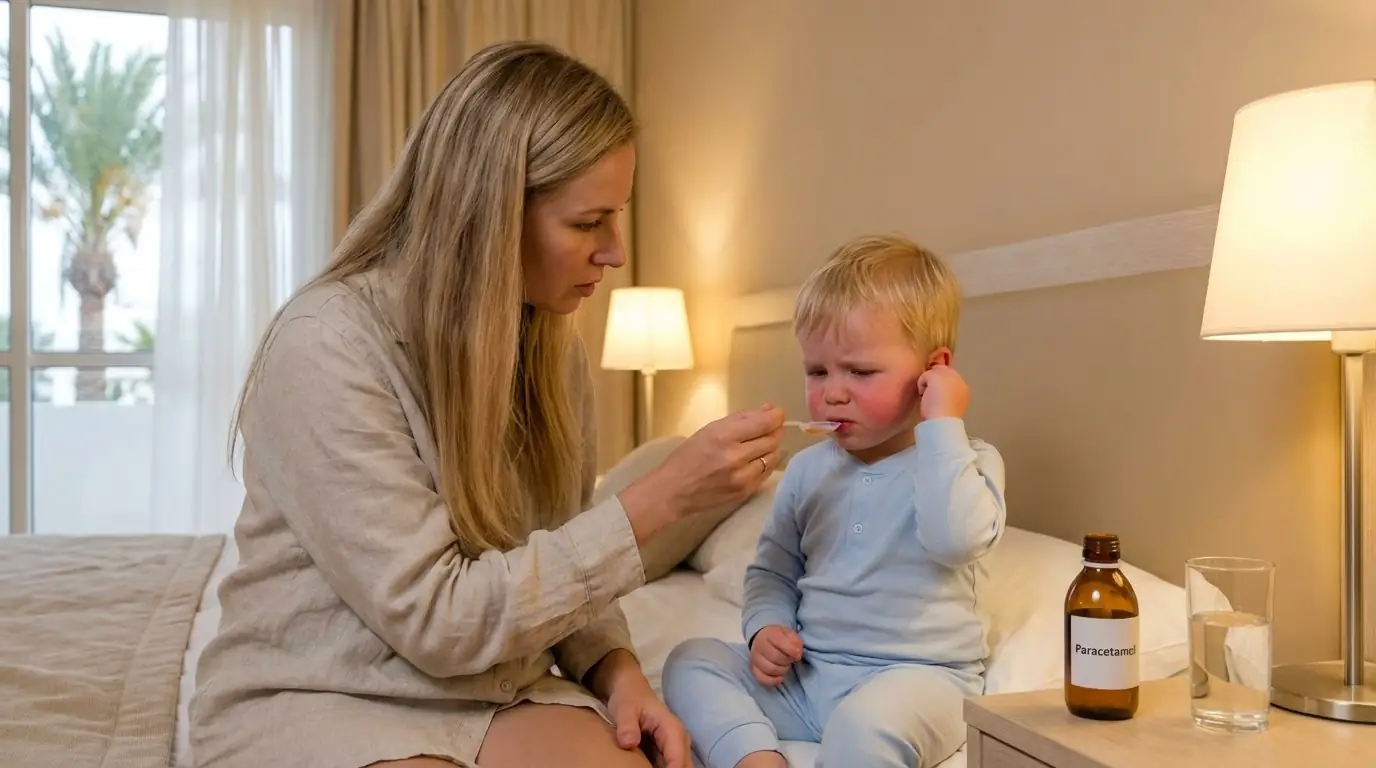
- Immediate pain and fever treatment
- Antibiotic prescription when indicated
- Antiemetic or antidiarrheal treatment
- Nebulization, aerosols or injections when required
- IV infusion in case of moderate dehydration
Medical coordination and international insurers
Managing a traveling child requires rigorous medical and administrative coordination.
This organization guarantees care aligned with European standards and assistance-company requirements.
- Direct contact with travel insurance
- Transmission of the medical report
- Organization of additional tests in a private clinic when needed
- Hospitalization or medical repatriation decision when indicated
- Medical follow-up until recovery or return home
Conclusion
Pediatric care for travelers in Tunisia relies on rapid clinical assessment, sound medical decision-making and effective international coordination.
In most situations, a pediatric consultation at the hotel with immediate treatment leads to favorable recovery without hospitalization while ensuring optimal safety for the child and family.