

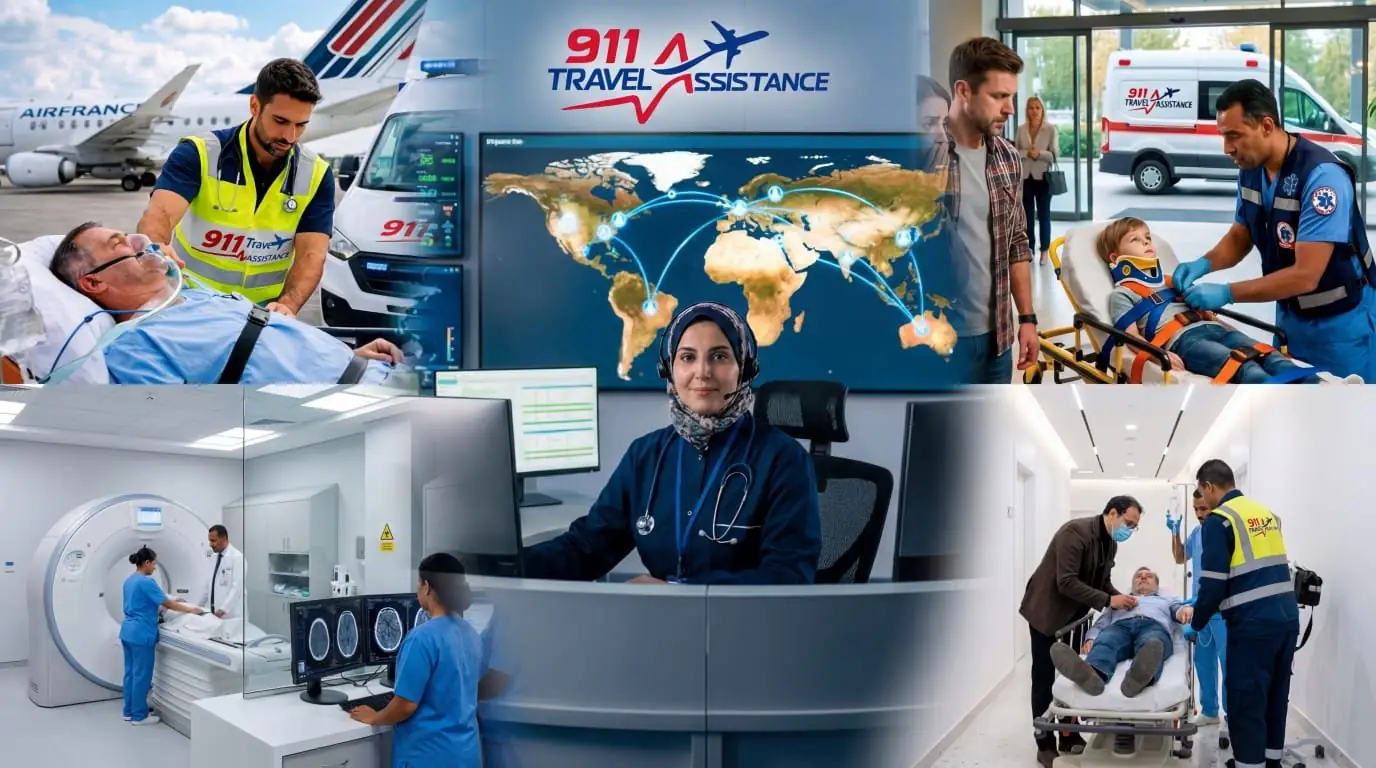


Initial organization and case activation
Hospitalizing a tourist in Tunisia requires fast medical and administrative organization to ensure care aligned with international standards.
As soon as a medical problem requires clinic admission, several steps must be coordinated at the same time: medical assessment, facility selection, insurer contact and transfer organization.
Medical assessment and hospitalization indication
The first step is a complete clinical assessment by a physician to determine severity and whether hospitalization is required.
This evaluation can be performed at the hotel, at home, in a nursing facility or directly in a clinic. Depending on patient status, transfer by medicalized ambulance can be arranged to the most appropriate private clinic.
Insurance coordination and opening the international file
Once the hospitalization decision has been made, coordination with travel insurance or the assistance company becomes essential.
Opening an international medical file makes it possible to obtain financial coverage without upfront payment when the policy allows it.
Initial medical reports are sent to justify hospitalization and secure guarantee approval.
Private-clinic admission and technical capabilities
Private clinics in Tunisia have modern technical platforms capable of managing most medical and surgical conditions: emergencies, surgery, cardiology, traumatology, intensive care and advanced medical imaging.
Hospital admission is generally rapid once the administrative file has been validated by the insurer.
Medical follow-up and coordination during hospitalization
During hospitalization, continuous coordination is maintained between the medical team, the clinic, the insurer and the patient's family.
This communication ensures continuity of care, validation of medical procedures and possible organization of medical repatriation when required.
Operational summary
Managing hospitalization for an international patient in Tunisia relies on rigorous medical and administrative coordination that guarantees safety, speed and compliance with international standards.
Conclusion
Successful hospitalization of a tourist in Tunisia depends on medical responsiveness, the quality of private facilities and close coordination with international insurers.
Administrative anticipation, rapid transmission of medical reports and logistical organization of transfer and admission ensure smooth, secure care aligned with assistance-company requirements and international medical standards.